
High Intensity Support Training
PARTICIPANT SPECIFIC CLINICAL TRAINING FOR NDIS SUPPORT TEAMS
Building Safe, Confident and Competent Care Teams
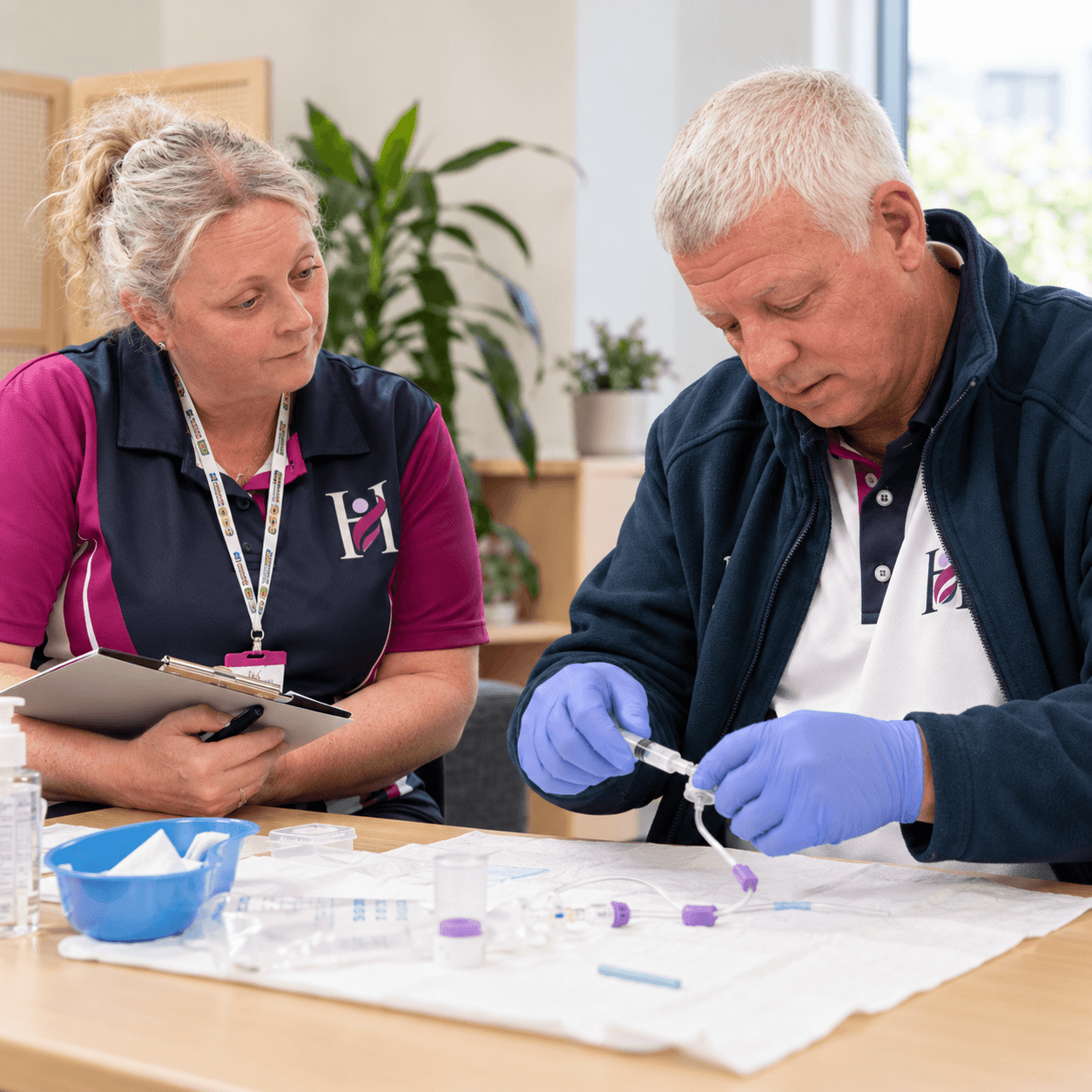
Heal at Home provides participant specific high intensity support training for NDIS providers, support workers and care teams across Australia. Our experienced clinical nurses and clinical nurse educators understand the responsibilities involved when supporting participants with complex health needs. Training is developed around the individual participant, their current nursing care plan, medical instructions, clinical equipment, identified risks and required support.
Our clinical nurse educators have extensive experience in community nursing, clinical education, competency assessment and nursing delegation. Training is delivered with consideration of the NDIS Practice Standards, High Intensity Support Skills Descriptors, the Nursing and Midwifery Board of Australia, or NMBA, professional standards and applicable AHPRA requirements.
Participant Specific Training
Training That Reflects The Person, Not Only The Procedure
High intensity support training must prepare workers to support a particular participant safely. General theory alone may not demonstrate that a worker can provide the required care in the participant’s environment.
Participant specific training may include:
Clinical Background
Current Care Plan
Equipment and Consumables
Routine Care Procedures
Warning Signs
Escalation and Emergency Responses
Practical Competency Assessment
Communication & Support Needs
Our High Intensity Support Training
Clinical Training Built Around The Participant
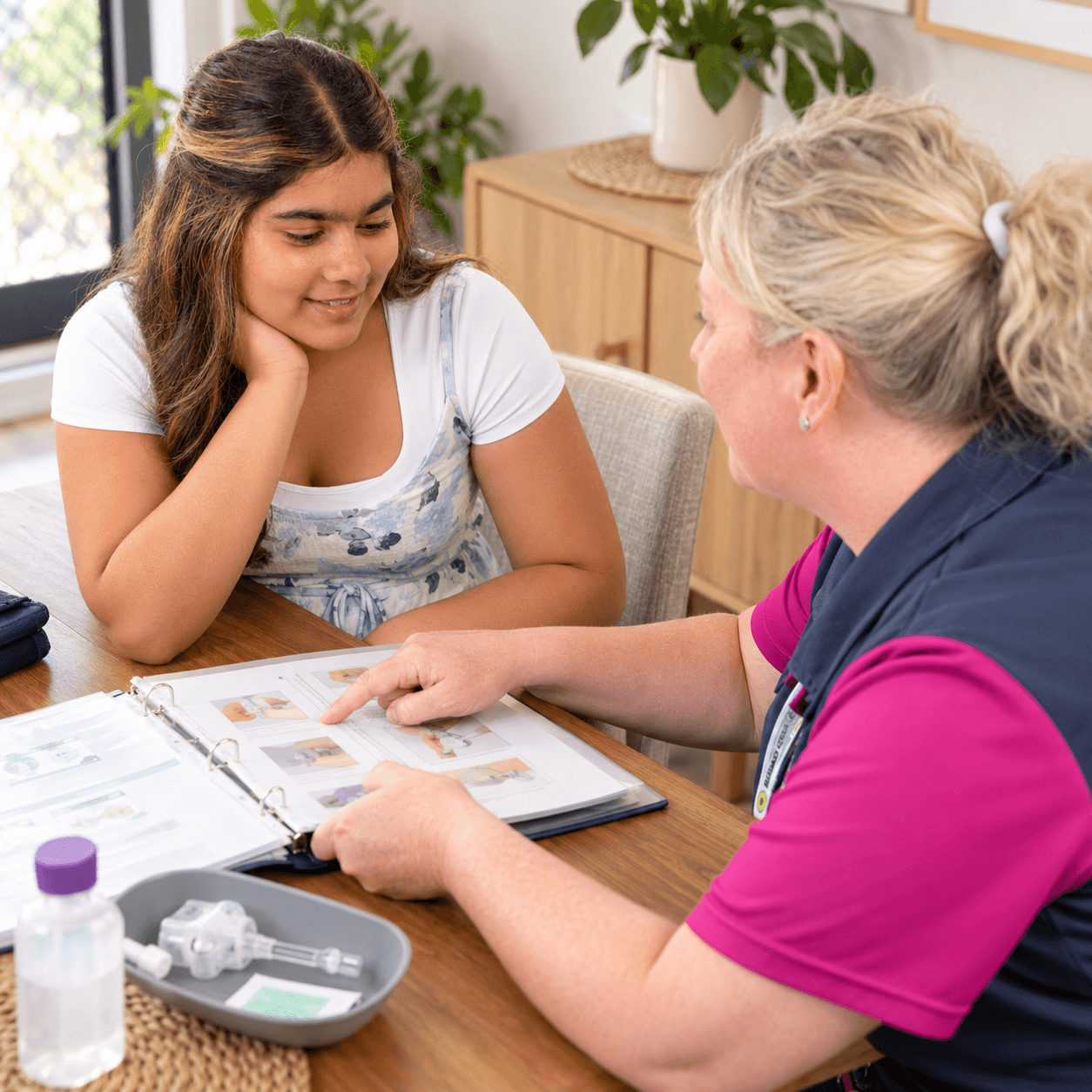
- Heal at Home can provide participant specific training in:
- Complex bowel care, enteral feeding and PEG management
- Dysphagia, tracheostomy, ventilator, BiPAP and respiratory support
- Urinary catheter, stoma and oxygen therapy
- Subcutaneous injections, diabetes and insulin support
- Complex wound and pressure injury management
- Epilepsy, emergency medication procedures and medication support
- Clinical deterioration, infection control, emergency escalation, documentation and incident reporting
- Training requirements are determined by the participant’s assessed needs, the activities staff will perform and the current clinical instructions.
What We Assess
What We Assess Before Training
- Before developing or delivering training, our nurse may assess:
- The participant’s health conditions and clinical needs
- Current medical orders and specialist instructions
- Existing nursing and medical management plans
- The procedures support workers are expected to perform
- Known clinical risks and previous incidents
- The participant’s communication and decision making needs
- Equipment, devices and consumables
- Infection prevention requirements
- Emergency procedures and escalation pathways
- Current staff knowledge and experience
- Documentation and incident reporting processes
- A nursing assessment or care plan review may be recommended when the existing information is incomplete, outdated or does not provide clear participant specific instructions.
Training and Competency Reviewed
When Training and Competency Should Be Reviewed
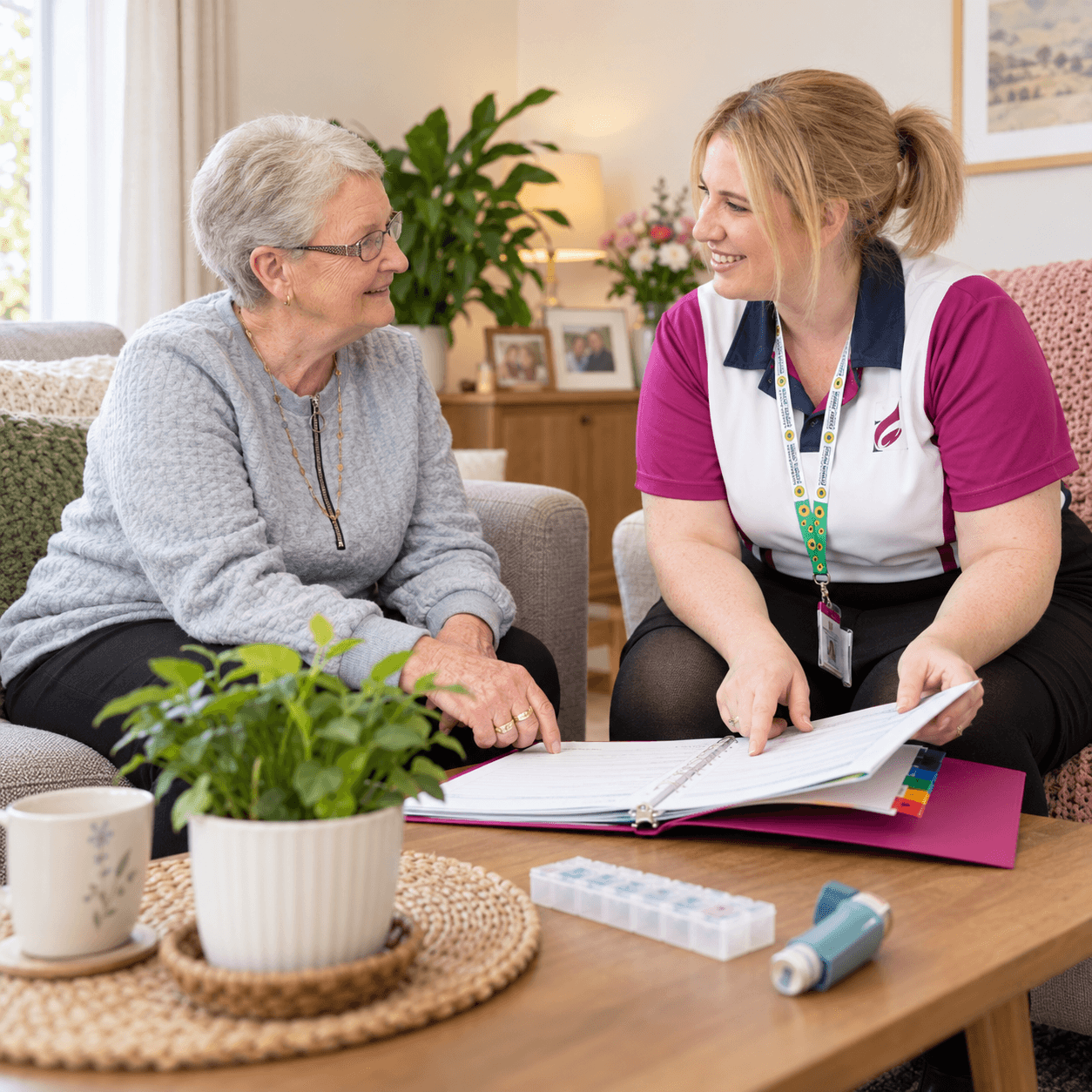
- Training and competency may require review when:
- The participant’s health condition changes
- The care plan or medical instructions change
- New equipment or consumables are introduced
- A clinical incident or near miss occurs
- A worker has not performed the procedure regularly
- The worker reports reduced confidence
- The participant changes provider or care environment
- The nurse identifies a change in clinical risk
- The provider’s policies require reassessment
- The recommended review date is reached
- Refresher training should be based on the participant’s needs, level of risk and the worker’s demonstrated competence.
Training Includes
What the Training Includes
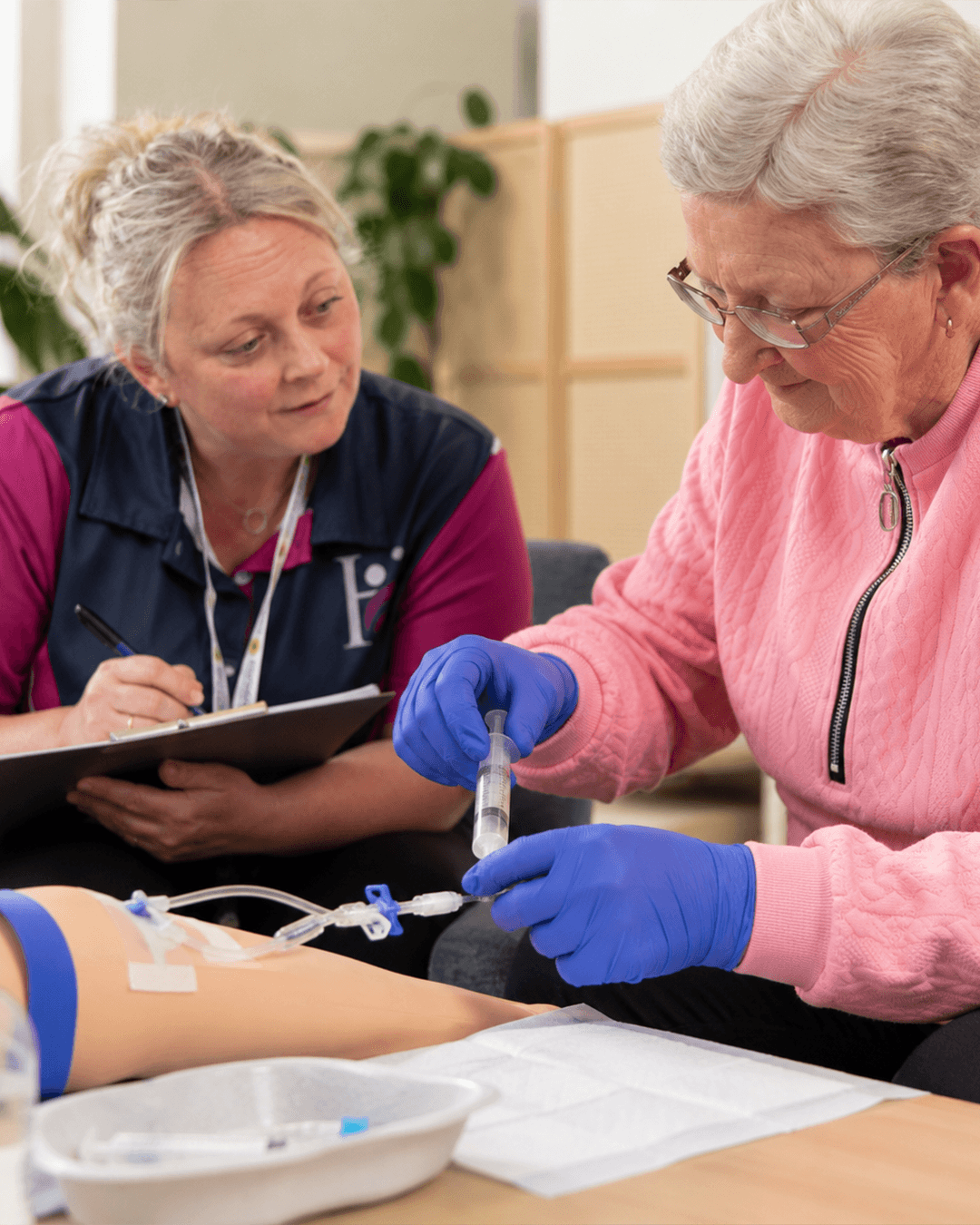
Theory Education
Participant Specific Instruction
Practical Demonstration
Supervised Practice
Individual Competency Assessment
Training Documentation
Competency Assessment and Sign Off
Competency Must Be Demonstrated Individually
- Competency assessment may consider whether the worker can:
- Explain the participant’s care requirements
- Follow the current care plan and medical instructions
- Prepare and use equipment safely
- Perform the required procedure correctly
- Apply infection prevention measures
- Recognise complications and clinical deterioration
- Respond appropriately to unexpected events
- Follow emergency and escalation procedures
- Complete required documentation
- Identify when nursing or medical advice is required
- If competency is not demonstrated, further education, supervised practice or reassessment may be required.
Nursing Delegation and Clinical Governance
Clear Responsibilities For Safe Support

- Where a registered nurse delegates an aspect of care, the nurse must use professional judgement and consider the participant’s needs, the complexity and risks of the activity, the worker’s competence and the level of supervision required. Heal at Home may provide:
- Nursing assessment
- Participant specific care plans
- Risk and escalation guidance
- Staff training
- Individual competency assessment
- Clinical delegation where appropriate
- Recommendations about supervision
- Scheduled competency reviews
- Refresher training
- Clinical consultation and governance support
- Care plan review following incidents or changes
- Delegation does not transfer the registered nurse’s professional accountability. The worker remains responsible for performing the delegated activity within their training, competence, role and organisational policies.
How the Assessment Process Works
Simple, Clear And Personalised

Contact or Refer
Call our team or complete the nursing assessment referral form.
Initial Discussion
We discuss the reason for referral, current concerns and available clinical information.
Nursing Assessment
A registered nurse completes a comprehensive assessment in the client’s home or another agreed location.
Clinical Documentation
We prepare the relevant assessment report, nursing care plan and recommendations.
Review and Next Steps
We explain the recommendations and discuss nursing care, training or further clinical support where required.
Service Does Not Include
What Our Training Service Does Not Include
- Heal at Home focuses on nursing assessment, participant specific clinical education, competency assessment and delegation. Our training service does not:
- Replace a required nursing assessment or current care plan
- Provide a medical diagnosis
- Prescribe or independently change treatment
- Replace medical plans that must be completed by a GP or specialist
- Guarantee that every attendee will be assessed as competent
- Provide automatic competency through attendance alone
- Authorise a worker to perform activities outside their role
- Transfer competency from one participant to another without assessment
- Replace the NDIS provider’s responsibilities as the worker’s employer
- Guarantee NDIS funding or compliance outcomes
- Provide a nationally recognised qualification unless specifically delivered through an appropriately registered training organisation
- Provide emergency or urgent medical treatment
- If the participant’s care plan or medical instructions are incomplete, Heal at Home may require further clinical information before training or competency assessment can proceed.
Support Training Benefits
Benefits of High Intensity Support Training
Safer Participant Support
Individual Competency Assessment
Greater Staff Confidence
Consistent Clinical Care
Consistent Care
Clear Scope and Responsibilities
Why Choose Heal at Home?
Experienced Clinical Nurse Educators Across Australia
- Heal at Home is a proudly Australian and family owned nursing organisation. Nursing is our sole focus and what we do best. Our training is delivered by experienced clinical nurses and clinical nurse educators with extensive knowledge of community nursing, complex clinical supports, competency assessment and professional nursing responsibilities.
- Experienced nurse educators and comprehensive assessments.
- Participant-specific training and personalised nursing care plans
- Theory, practical education and individual competency assessment
- Nursing delegation where appropriate
- Alignment with NDIS and NMBA standards.
- Clear competency documentation, refresher training and reassessment.
- Clinical governance support for NDIS providers across metropolitan, regional and country communities
- We provide training across SA, WA, QLD, NSW and VIC, with flexible face-to-face training options.
What Our Clients Say About Heal at Home
See what our clients and families have to say about their experience with Heal at Home and our personalised in-home nursing and care services.
Posted on Google![]()
Just Better Care AdelaideTrustindex verifies that the original source of the review is Google.
Since using Heal at Home for our client base, we have see an improvement in service and clinical outcomes. Highly recommend Heal at Home !Posted on Google![]()
Anita WebberTrustindex verifies that the original source of the review is Google.
Heal at Home are an excellent nursing provider, always flexible and supportivePosted on Google![]()
Karina GiulianiTrustindex verifies that the original source of the review is Google.
I am a Support Coordinator and work with many providers. I am thrilled with the quality of service provided by the team at Heal at Home. They are clearly a united team. They are responsive, open and honest with the outcomes of their care and they back up this care with excellent documentation and records that compliment the process of monitoring client health. Stand out provider.Posted on Google![]()
J&D SupportsTrustindex verifies that the original source of the review is Google.
Provided excellent training to my staff. Highly recommend
Frequently Asked Questions
High intensity support training prepares workers to provide participant specific supports involving complex healthcare needs and significant clinical risks.
Yes. Training is based on the participant’s current assessment, care plan, medical instructions, equipment, risks and required support.
No. Attendance and competency are different. Each worker must demonstrate the required knowledge and practical skills before they can be assessed as competent.
Yes. Our registered nurses can assess the participant and develop or review the required nursing care plan before training begins.
Yes. Each worker can be assessed individually. Competency documentation reflects the participant, procedure and circumstances assessed.
Not automatically. Each participant has different needs, risks, care plans and equipment. Further participant specific training or competency assessment may be required.
Yes. We provide refresher education and competency reassessment when care needs change, following an incident, when skills have not been used regularly or when the scheduled review date is reached.
Arrange High Intensity Support Training
Our Clinical Partners
We work with and maintain professional affiliations with respected Australian nursing and clinical organisations.
Wounds Australia
Clinical Partner

Continence Health
Australia Member
Australian College of Nursing
Affiliate Member